
Condition guide
Pokemon Card Condition Guide: What Your Card Is Worth
Condition is one of the biggest reasons two copies of the same Pokemon card can sell for very different prices. A clean estimate starts with honest grading language.
Why condition matters so much
Condition affects both buyer trust and final price. A card with the same name, set, and rarity can have a very different value if one copy is clean and another has whitening, scratches, dents, or a crease.
For raw cards, condition is an estimate. You are not assigning a professional grade, but you still need a consistent way to describe what a buyer or collector would see.
Common raw card condition bands
Collectors often use these broad bands when discussing raw Pokemon cards:
- Near Mint: clean surface, sharp corners, minimal edge wear, no obvious damage.
- Lightly Played: small scratches, tiny whitening, or minor handling wear.
- Moderately Played: visible wear, surface marks, corner wear, or stronger whitening.
- Heavily Played: heavy scratches, dents, strong edge wear, or a card that clearly looks worn.
- Damaged: creases, bends, water damage, peeling, writing, tears, or major structural issues.
What to check before pricing
Look at the card in bright indirect light and tilt it slowly. Some surface scratches only show at an angle, especially on holo areas.
Check the front, back, corners, edges, and surface. Back-side whitening is easy to miss if you only look at the artwork.
- Corners: rounded, frayed, bent, or chipped corners lower condition.
- Edges: whitening and chips are common on older cards.
- Surface: scratches, dents, print lines, and holo wear can matter a lot.
- Creases: even small bends usually push a card far below Near Mint.
- Centering: severe centering issues can matter more for grading than casual raw sales.
Real Kardex examples
Condition matters most on cards buyers already care about
When demand is high, small condition differences can change the final decision: hold, sell raw, grade, or wait.
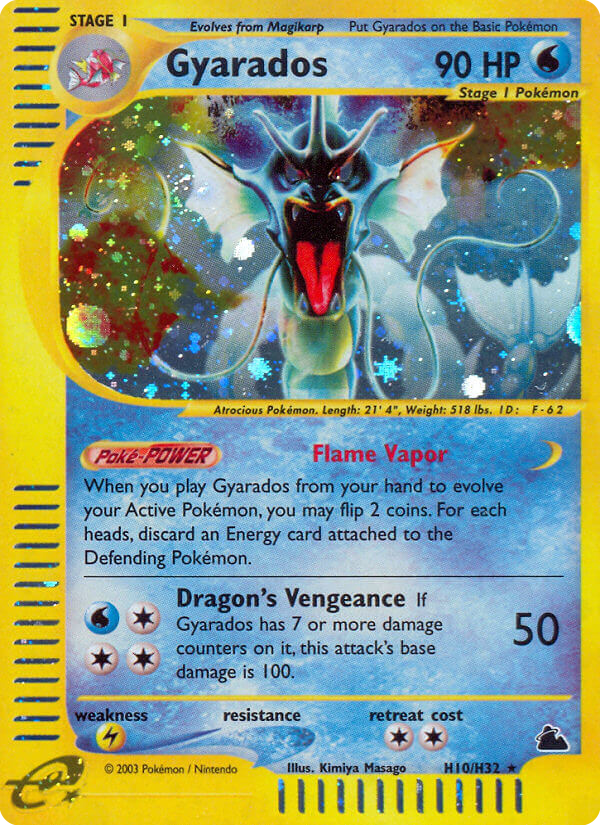
Gyarados
Skyridge #H10
Rare Holo Market price $1,250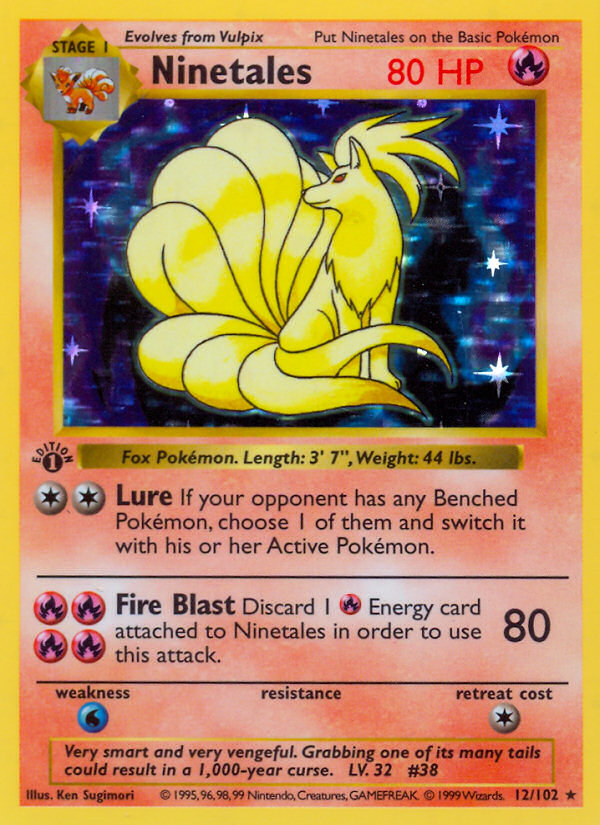
Ninetales
Base #12
Rare Holo Market price $800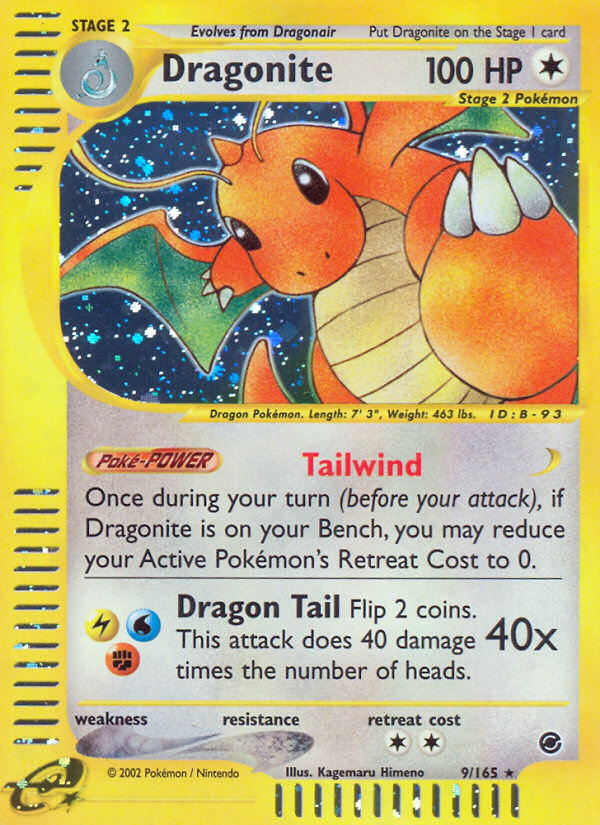
Dragonite
Expedition Base Set #9
Rare Holo Market price $800Raw condition is not the same as PSA 10
A raw Near Mint card is not automatically a PSA 10 candidate. Professional grading looks at centering, corners, edges, surface, authenticity, and consistency under closer inspection.
When checking value, avoid comparing your raw card directly to high-grade slab prices unless you have a strong reason to believe grading is realistic.
A conservative rule for selling
If you are unsure between two condition bands, price closer to the lower band. Conservative condition descriptions reduce disputes and make your own collection value more realistic.
Condition matters in proportion to what the card is worth
On a card worth $0.31 — the median card in a modern set — the difference between Near Mint and Moderately Played is not worth the time it takes to assess. On a card worth four figures it is the largest single variable you control.
So sort by value first and condition second. Grade carefully the cards that could reach $20 or more, and sleeve the rest without agonising over whitening you need a loupe to see.
What grading actually adds, with numbers
A graded slab is worth more than the raw card because it carries authentication and a condition guarantee. How much more varies widely. Three cards as of August 3, 2026:
Notice the range: the same PSA 10 grade multiplies one card by four and another by less than two. The multiple depends on how hard the card is to grade well and how many high grades already exist. Grading fees and turnaround also have to come out of that gap, which is why grading a $20 card rarely makes sense.
- Charizard ex, 151 — $367.33 raw Near Mint, $1,477.12 in PSA 10, about 4x
- Umbreon VMAX, Evolving Skies — $2,319.52 raw Near Mint, $4,259.96 in PSA 10, about 1.8x
- Umbreon ex, Prismatic Evolutions — $1,496.27 raw Near Mint, $6,421.67 in PSA 10, about 4.3x
Assessing a card in about a minute
Work in the same order every time and you will be consistent, which matters more than being strict. Hold the card under a single light source, not a window, and tilt it.
Check the four corners first — they show wear before anything else does. Then the edges for whitening along the back border. Then the surface, tilted, for scratches and print lines. Then centering, comparing the border widths on the front. Finally the back, which collectors and graders both look at and sellers routinely forget to photograph.
Check what your cards are worth before you sort them
Value first, condition second. These set lists show current raw Near Mint prices for every card.
FAQ
Can a damaged Pokemon card still be valuable?
Yes, if the card is rare or highly demanded. But damage usually reduces value sharply compared with cleaner copies.
Does whitening matter?
Yes. Edge and corner whitening is one of the most common condition issues and can move a card below Near Mint.
Should I clean a Pokemon card before selling?
Be very careful. Aggressive cleaning can damage the card. For valuable cards, avoid anything that changes the surface.
Is it worth grading a $20 card?
Usually not. Grading fees, shipping and turnaround have to come out of the gap between the raw and graded price, and on a low-value card that gap is smaller than the cost of getting there.
Does a Near Mint card always grade PSA 10?
No. Near Mint is a market condition label, while a PSA 10 is a strict assessment of centering, corners, edges and surface. Plenty of Near Mint cards grade 8 or 9.
Track your collection in Kardex