
Pokemon card value guide
How to Check Pokemon Card Value Without Guessing
The fastest way to value a Pokemon card is to identify the exact card first, then check the right variant, condition, and recent market price. A name alone is not enough.
The short answer
To check a Pokemon card's value, match the exact card name, set, number, rarity, finish, and condition. Then compare current market prices for that specific version. If any of those details are wrong, the estimate can be wildly off.
1. Identify the exact card
Start with the card name, but do not stop there. Many Pokemon have dozens or hundreds of cards, and some look similar at a glance. The set symbol and collector number are usually the details that separate a common card from a valuable one.
Look for these fields before checking prices:
- Pokemon or trainer name
- Set symbol and set name
- Collector number, such as 4/102 or 199/165
- Rarity mark
- Language and edition details
2. Check the variant or finish
The same card can have multiple finishes. Holo, reverse holo, normal, alternate art, promo, stamped, and special illustration versions can behave like different market items.
If you are comparing your card to a marketplace listing, make sure the artwork, set number, and finish match. A near match is not enough for pricing.
Real Kardex examples
Same job, very different cards
These examples come from the Kardex card database. The useful lesson is the exact identity: set, collector number, rarity, and image all matter before any price comparison.
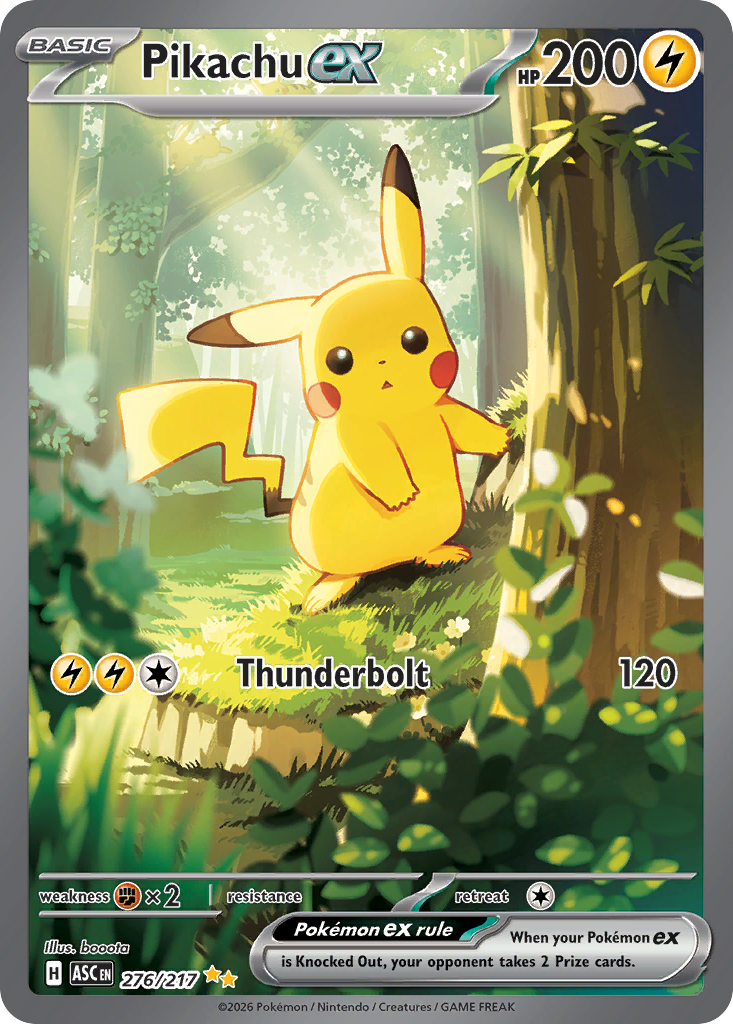
Pikachu ex
Ascended Heroes #276
Special Illustration Rare Market price $1,161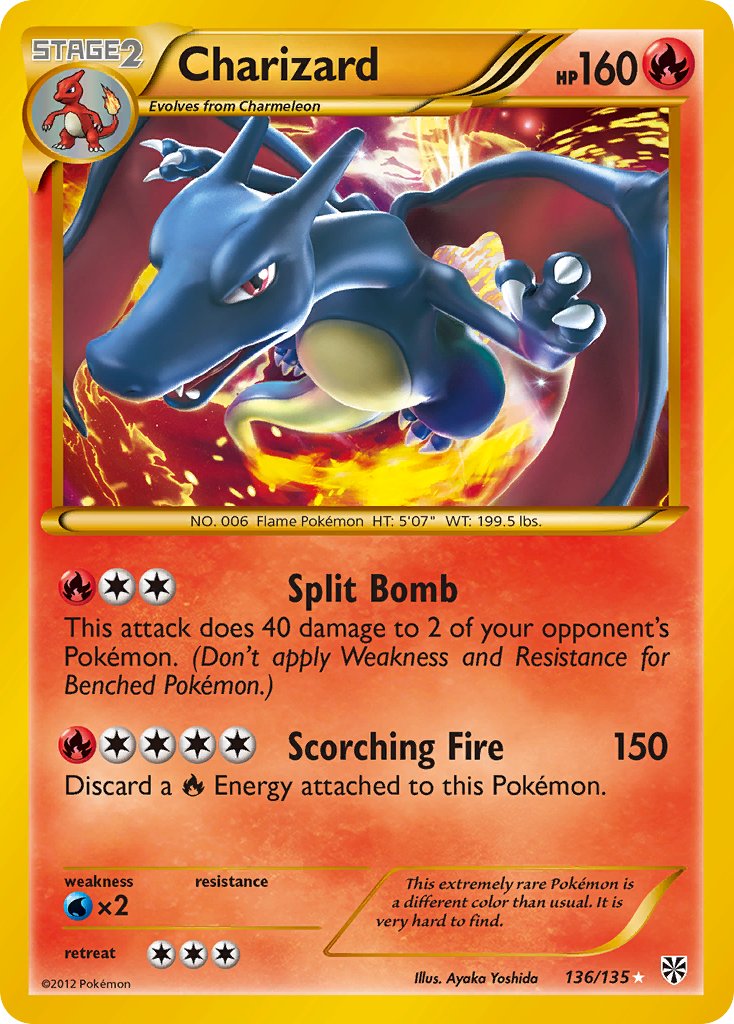
Charizard
Plasma Storm #136
Rare Secret Market price $1,150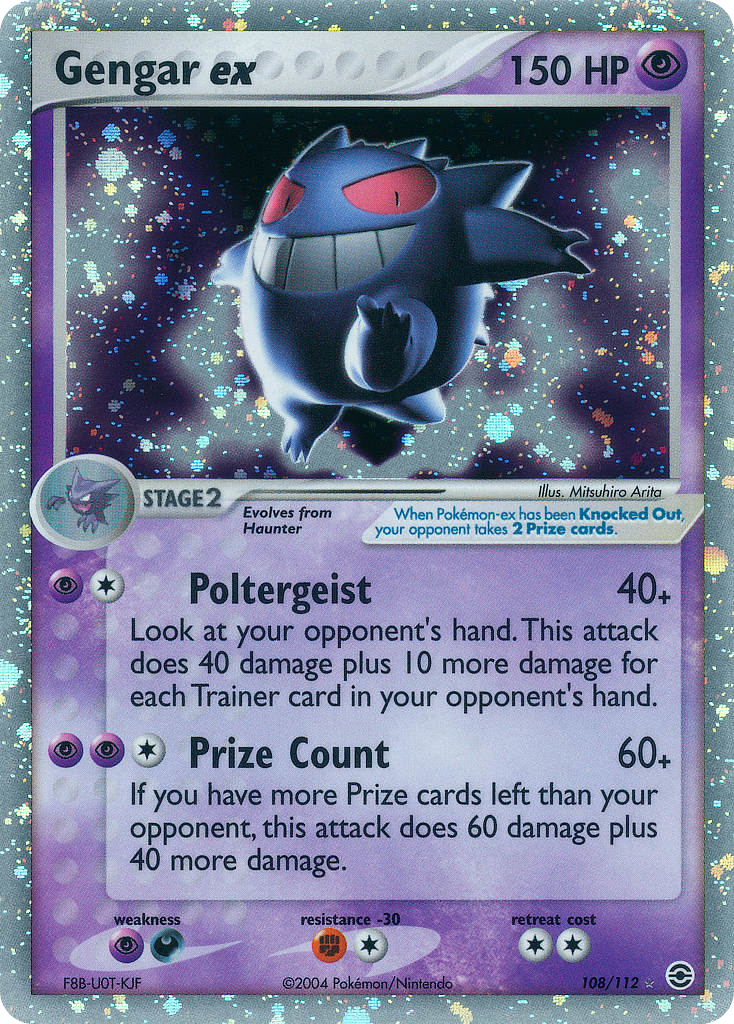
Gengar ex
FireRed & LeafGreen #108
Rare Holo EX Market price $1,4003. Estimate condition honestly
Condition is one of the biggest value differences. A card with whitening, scratches, dents, creases, or edge wear should not be priced like a Near Mint copy.
Most collectors think in simple bands:
- Near Mint: very clean, minimal visible wear
- Lightly Played: small edge or surface wear
- Moderately Played: clear wear but still presentable
- Heavily Played: strong wear, scratches, whitening, or dents
- Damaged: creases, water damage, tears, writing, or major defects
4. Compare current market prices
Use recent market context rather than a single asking price. Sellers can list cards for any amount, but that does not mean buyers are paying it. For a better estimate, compare recent marketplace prices for the exact version and condition.
If the card is expensive, graded, or unusually rare, check multiple sources before making a sale or purchase decision.
Common mistakes that lead to bad values
- Pricing a damaged card as Near Mint.
- Confusing a reverse holo with a normal or holo version.
- Using only the highest active listing as the value.
- Ignoring the set number when two cards share similar artwork.
- Comparing raw cards to graded PSA, BGS, or CGC prices.
The name on the card tells you almost nothing
Here is the same Pokemon across English sets, using raw Near Mint market values as of August 3, 2026. Every one of these cards says Charizard on the front.
The gap between the cheapest and the most expensive is roughly three thousand times. Set, number, rarity and finish carry all of that difference, and none of them are in the name.
- Charizard, Plasma Storm #136/135, Rare Secret — $1,150.00
- Charizard ☆ δ, Dragon Frontiers #100/101, Rare Holo Star — $950.00
- Charizard, Vivid Voltage #025/185, Rare — $3.54
- Charizard Spirit Link, Evolutions #75/108, Uncommon — $0.35
Prices move, so an estimate without a date is not an estimate
Card prices are not fixed the way a book price is. Over the 30 days ending August 3, 2026, Rayquaza V from Evolving Skies moved +35.5% to $90.88, while Iron Valiant ex from Prismatic Evolutions fell 24.6% to $53.31.
That is why every price on this site carries the date it was last updated. If you are quoted a value with no date attached, treat it as a starting point rather than an answer, and check the current market before you buy, sell or trade.
Raw and graded are two different markets
A raw card and the same card in a graded slab do not trade at the same price. Grading adds authentication and a condition guarantee, and the market pays for both. Three examples as of August 3, 2026:
The multiple is not fixed. It depends on how hard the card is to grade well, how many high grades already exist, and how much demand there is for that specific card. Never assume your raw card is worth the PSA 10 price you saw on a marketplace.
- Charizard ex, 151 — $367.33 raw Near Mint against $1,477.12 in PSA 10
- Umbreon VMAX, Evolving Skies — $2,319.52 raw Near Mint against $4,259.96 in PSA 10
- Umbreon ex, Prismatic Evolutions — $1,496.27 raw Near Mint against $6,421.67 in PSA 10
Check a full set list with current prices
Every card in these sets with its raw Near Mint market price and 30-day movement.
- 151 card list and prices — 207 cards, including Charizard ex
- Base Set card list and prices — the 1999 set most value questions start with
- Evolving Skies card list and prices — 237 cards, home of Umbreon VMAX
- All Pokemon TCG set lists — browse every published set
FAQ
Can I check a Pokemon card value from a photo?
Yes, a photo can help identify the card, but value still depends on the exact match, finish, condition, and current market data. A scanner should be treated as a fast starting point, not a guarantee.
Why do two cards with the same name have different values?
They may come from different sets, have different collector numbers, different artwork, different finishes, or different conditions.
Should I use graded prices for my raw card?
No. A raw card should usually be compared to raw market prices. Graded prices include grading outcome, authentication, holder value, and population dynamics.
Does the same card have one price?
No. A single printing can have a raw price per condition and separate graded prices per company and grade. Compare like with like: raw Near Mint against raw Near Mint, PSA 10 against PSA 10.
How often do Pokemon card prices change?
Daily. Movements of 10 to 30 percent in a month are ordinary for cards with real demand, in both directions, which is why a dated price matters more than a precise one.
Bottom line
Pokemon card value starts with identification. Match the exact card, confirm the variant, judge condition honestly, and compare current prices for that version. If you want a faster workflow, Kardex is built to help you scan, check, and track cards in one place.
Check cards with Kardex